High Nasal Carriage of MRSA-mecC in Wild Rabbits in the Iberian Peninsula: a Wildlife Reservoir?
Abstract
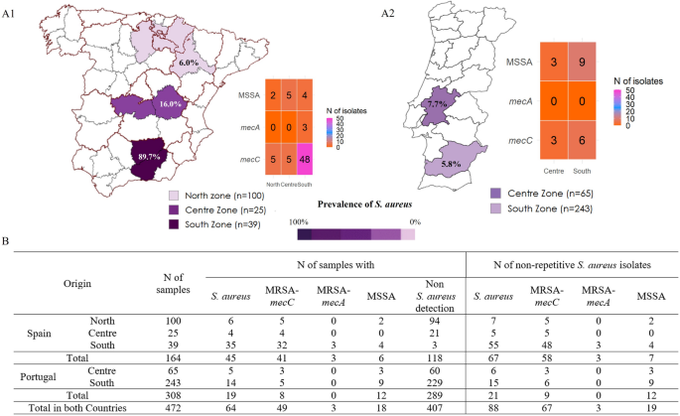
Staphylococcus aureus is a commonly found bacteria on the skin and mucous membranes of humans and animals. It can act as an opportunistic pathogen causing multiple infections of diverse severity. Moreover, S. aureus can acquire resistance to multiple antibiotics, with methicillin-resistant S. aureus (MRSA) being a significant global health concern. European wild rabbit (Oryctolagus cuniculus) is an important species in Iberian ecosystems and can serve as reservoirs for zoonotic bacteria. In this study, 472 nasal samples from wild rabbits in Spain and Portugal were analyzed to determine the prevalence, antimicrobial resistance, and molecular characteristics of S. aureus. Overall, S. aureus was detected in 13.6% of animals, with higher prevalence in animals of Spain (27.4%) than in those of Portugal (6.2%). MRSA was found in 51 samples (10.8%), predominantly carrying the mecC-agrIII-SCCmecXI genes associated with CC130, and three isolates carried mecA-agrI-SCCmecV and belonged to CC398. Resistance to penicillin (92.1%), cefoxitin (79.6%), ciprofloxacin (7.9%), tetracycline (5.7%), erythromycin (2.3%) and gentamicin (1.1%) was observed. A marked intra-host diversity was detected and different S. aureus isolates were observed in the same sample in 35.4% of the positive rabbits. Virulence genes lukED and etd2 were frequent, whereas the scn human-adaptation marker (IEC system) was present in 33.0% of the eighty-eight non repetitive S. aureus isolates. These results suggest that Iberian wild rabbits may constitute a relevant reservoir of MRSA-mecC-CC130, highlighting their potential role in One-Health dynamics, warranting continued wildlife surveillance. https://link.springer.com/article/10.1007/s00248-026-02713-6