
Serosurveillance of Crimean-Congo hemorrhagic fever virus in zoo animals, Spain, 2007–2024
Abstract
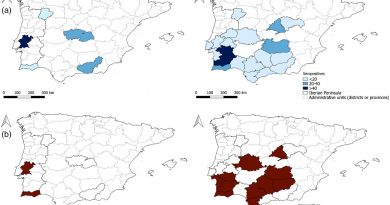
Crimean-Congo hemorrhagic fever virus (CCHFV) is a tick-borne zoonotic pathogen of significant public health concern worldwide. In Spain, CCHFV infection is considered an emerging and underdiagnosed disease. In this country, wildlife exhibits high levels of CCHFV exposure, and 20 autochthonous human cases, including six fatalities, have been officially reported in recent years. Zoos represent unique epidemiological interfaces, housing a high diversity of wildlife species in close contact with humans and serving as habitats for pathogens and tick communities. However, information on the role of captive wildlife inhabiting urban and peri-urban areas in the epidemiology of CCHFV remains limited. The aim of the present study was to evaluate the circulation of CCHFV in zoo-housed wildlife in Spain. From 2007 and 2024, serum samples from 956 zoo-housed mammals covering 173 species and 38 families were collected across 19 zoos and wildlife rescue centers in Spain through intermittent sampling. Anti-CCHFV antibodies were detected by ELISA in two white rhinoceroses (Ceratotherium simum) and one dromedary camel (Camelus dromedarius) (0.3 %; 95 % CI 0.0–0.7) sampled in the same zoo in central Spain. Virus neutralization test was performed on ELISA-positive samples, confirming the presence of specific neutralizing antibodies in one white rhinoceros. To the best of the authors’ knowledge, this is the first CCHFV surveillance in zoo-housed animals worldwide. Our results suggest low and geographically localized seropositivity for CCHFV. Including CCHFV monitoring in surveillance programs in zoos could provide valuable insights into the virus’s epidemiology in anthropogenic environments, particularly in high-risk areas. https://t.co/ylMdYcxqCm