A Wake-Up Call on the Relevance of Rewilding Processesfor Disease Ecology
ABSTRACT
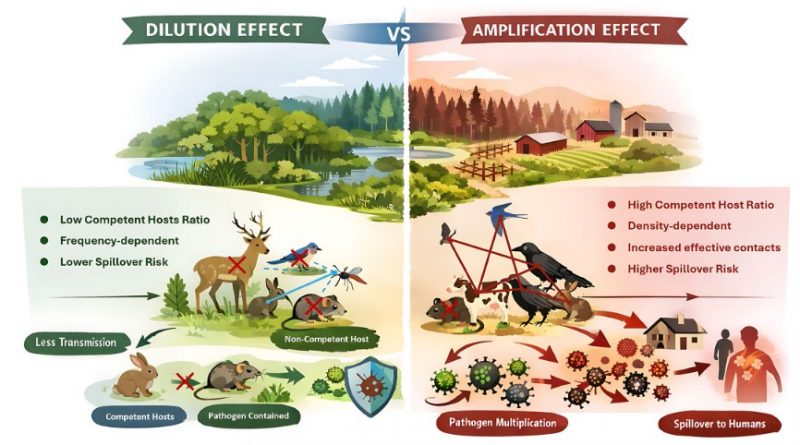
Rewilding, through both passive and active strategies, is a promising conservation approach to restore ecosystemfunctions and biodiversity. Nevertheless, it may unintentionally influence disease dynamics. This perspective examines the mechanisms by which rewilding influences disease ecology and provides guidelines forintegral surveillance. Shifts in community structure and landscape modulate host-vector-pathogen interactions, modulating the emer-gence, persistence, and spillover of pathogens. We present how these factors, associated with rewilding projects, can modifyecosystem stability and health-related risks to wildlife, domestic animals, and human populations. This work highlights the importance of integrating disease ecology into rewilding frameworks, advocating for a One-Health approach that focuses on both domestic and wild animals, the environment, and human health. Implementation of context-specific monitoring and early detection systems is essential for identifying andmanaging disease threats. By integrating proactive control measures, rewilding efforts can ensure the fulfilment of ecologicalgoals while mitigating adverse health consequences.